
Hey again!
I’m excited to talk about this topic as it is of huge importance to your long term health! If you’ve signed up to receive notifications of new posts, I’m going to present information every week or two that will be in an order of what I feel is most important to implement. This topic is foundational so it’s at the top of the list to share! I’m really glad you’re reading!
Most everyone has heard about the Omega 6 and Omega 3 essential fatty acids. They are called essential fatty acids because your body cannot synthesize them, so it’s essential to get them through the food you eat. They are the building blocks of cell membranes and control the inflammation processes.
It seems like every food label out there is now advertising how many Omega 3s their product contains! It’s great to be aware of getting more Omega 3s in your diet but the most important part of this is what the ratio is between the Omega 6s and Omega 3s that you’re getting through diet on a daily basis. Most experts agree that this ratio should be anywhere from 1:1 – 4:1 (Omega 6:3). If you eat the standard American diet, your ratio might be anywhere from 14:1 to 50:1! Epidemiology and dietary intervention studies have concluded that while an exceptionally high omega-6:omega-3 ratio promotes the development of many chronic diseases, a reduced omega-6:omega-3 ratio can prevent or reverse these diseases. For example, a ratio of 4:1 was associated with a 70% reduction in mortality in secondary coronary heart disease prevention and a ratio of 2.5:1 reduced rectal cell proliferation in patients with colorectal cancer. A lower omega-6:omega-3 ratio in women was associated with decreased risk for breast cancer. A ratio of 2:1–3:1 suppressed inflammation in patients with rheumatoid arthritis, and a ratio of 5:1 had a beneficial effect on patients with asthma, whereas a ratio of 10:1 had adverse consequences.from 1:1 – 1:4. (gbhealthwatch.com)
The way I’ve come to understand the importance of maintaining a good ratio is to think of it like this: Omega 6s are the building up, pro inflammatory guys, acting like an accelerator and the Omega 3s are the breaking down, anti inflammatory guys which act like a brake. You need both. You want some inflammation to take place during a good immune response when you are hurt or sick but you wouldn’t want a constant state of inflammation, which is what you get when your diet is higher in Omega 6s in relation to Omega 3s. It needs to be as much in balance as you can make it.
After understanding how important these fatty acids are and what they do, it made me understand why Dr. Budwig (see previous post about My Cancer Protocol) put her patients on so much flax oil and didn’t allow other oils, other than a little bit of coconut oil. It makes perfect sense!
So where do you get Omega 6s? From anything made with vegetable oils – which is practically all processed food, even organic! Sunflower, safflower, soy, corn, canola and even healthy foods, such as walnuts, almonds, etc. contain higher amounts of Omega 6s.
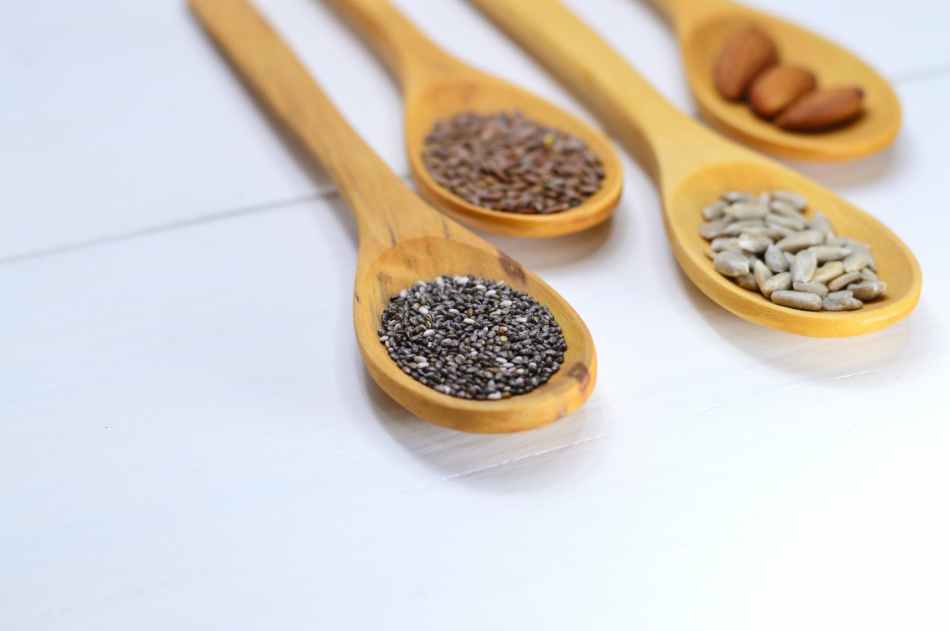
Omega 3s are contained in a much more limited list of foods. Fish oils, fatty fish (such as salmon and sardines), flax seeds and flax seed oil, chia seeds; these all contain Omega 3 fatty acids.
Looking at those lists, it’s pretty obvious to see how we easily can consume a far greater amount of the Omega 6s! For instance, if you eat a really large salad full of nutritious green leafy veggies but top it with a salad dressing made with soybean or canola oil (think almost every commercially prepared salad dressing on store shelves), you’d have a large load of the Omega 6s and would be hard pressed to be able to get enough Omega 3 foods to bring it into balance. Add to that a few processed foods made with vegetable oils or a quick spin through the drive thru at your favorite fast food restaurant and you’re in trouble nutritionally! Eating this way, day after day, and you’ve got chronic inflammation which leads to a host of diseases, which are entirely preventable with the right dietary strategies.
So what’s the easiest way to know how to eat so you have a good balance of these fats? There’s a free app called Cronometer which does just that. Just download it to your computer or phone (or both) and plug in an average day of foods you ate or typically eat in the food diary section. Then scroll down and it shows you literally everything you could possibly want to know about what those particular foods gave you: vitamins, minerals, macronutrients, calories, and, the Omega’s. You can then play around with the food entries and keep checking the essential fatty acid ratio until you get it in the healthy range. If you scroll down to the sections that break down the food you ate into individual nutrients and hover over the percentage for each item, a little chart will pop up showing you what foods contributed to that particular nutrient. This makes it very easy to see how to adjust, if the balance isn’t where you want it. For instance, if I know that I’ll be eating salmon for lunch one day (high in Omega 3), I might plug that in first thing in the morning and then see that I don’t need two tablespoons of flaxseed with breakfast, but only one. Or if I gobbled down a lot of walnuts or almonds/almond butter, I might need to throw in an extra tablespoon of flax seeds or flax seed oil to balance out the ratio. I don’t use it everyday but you could if you like the food diary discipline. I just do it periodically to check those two ratios and I’ve played around with it enough that I have a general idea on how to adjust.
A lot of the advice regarding this subject recommends cutting way down on the Omega 6 fats, rather than trying to eat loads of Omega 3 foods. That’s easier to do and also has the benefit of reducing all the other unhealthy ingredients that usually come along with processed food.
My Fitness Pal doesn’t break it down to this extent, which is why I recommend Cronometer. It’s free, easy to set up and use, and you’ll find it an excellent tool to get your diet heading in the right direction!
For the sake of your health, please give it a try and let me know what ratio you find you typically eat and how you might try to adjust it! Even people eating fairly healthy diets sometimes neglect to check out this crucial ratio!
Bottom line: strive to eat in a way that the Omega 6:3 ratio is close to 1:1!
Shopping Tip: Barlean’s Flax Oil is an excellent brand to use and what was recommended to me by Dr. Taylor over 20 years ago. It still is one of the best selling and freshest oils available.
 Karen Lockhart
Thanks, Karen! Enjoying the info! 🙂
LikeLike
Thanks for all the information and the app recommendation!
LikeLike