
“One’s mind, once stretched by a new idea, never regains its original dimensions.” – a quote by Oliver Wendell Holmes
I thought this quote was a accurate way to introduce the book, “The Circadian Code” because once you gain the knowledge contained in this book, your mind will forever think differently – you won’t be able to help it!
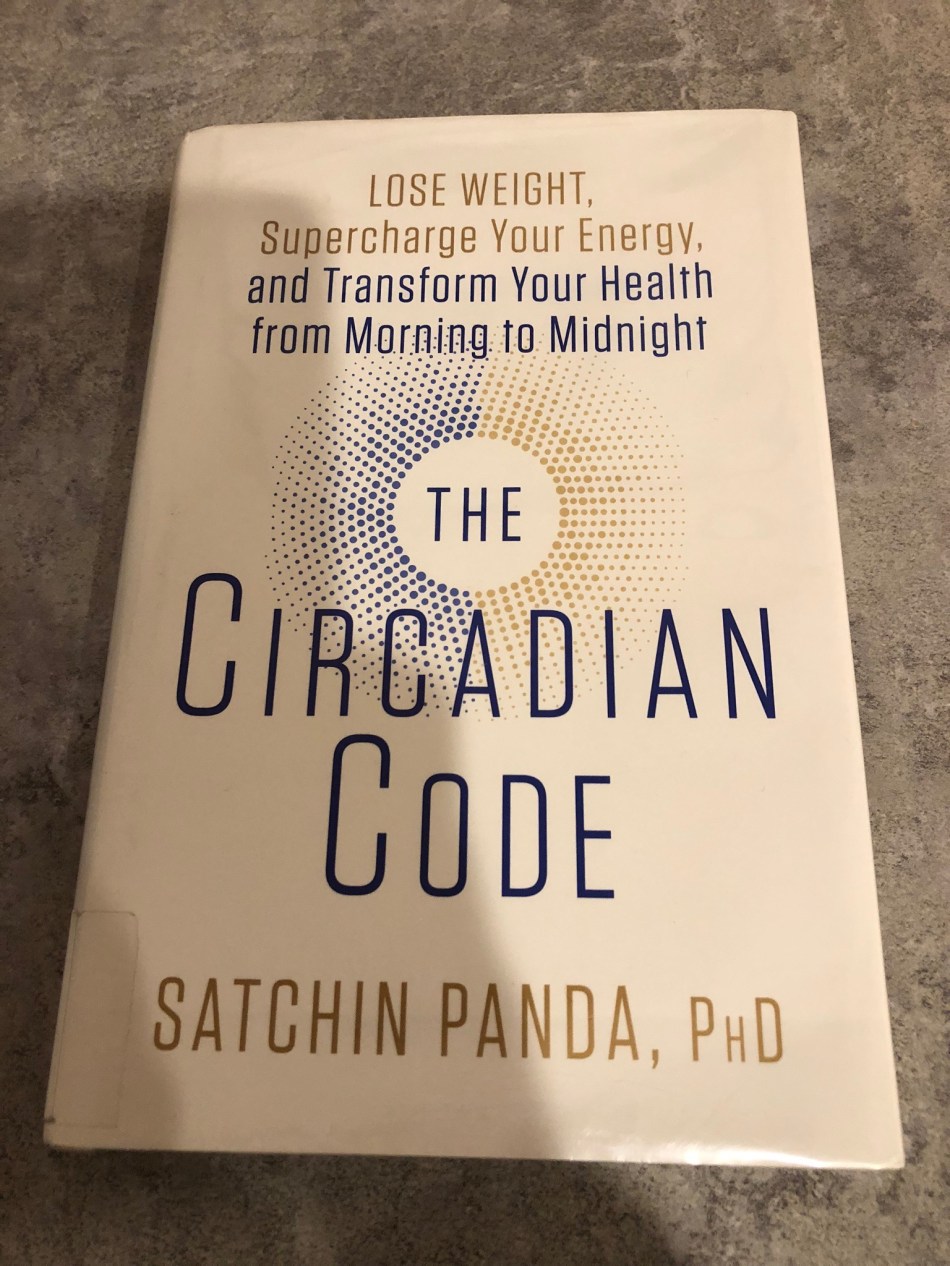
The Circadian Code written by Satchin Panda, a circadian biologist at the Salk Institute for Biological Studies is a “must read”! I saw it at the library on the new books shelf several months ago, was intrigued by the title and checked it out! I am so glad I did! It is a real eye-opener into the inner workings of our body and how it relates to the 24 hour dark/light cycle. Plus, it’s easy to read – not too technical and scientific but thorough and practical!
I’m going to attempt to summarize some key points to pique your curiosity so you’ll want to read the whole book!! For instance, this is the ground breaking research that is the reason there are programs to change the light on our computers and cell phones so our eyes get different light input that changes over the course of the day and night! AND . . . hospitals are now using this same research to understand why organ transplant patients do better depending on the time of day surgery is performed! How fascinating is that???!!!!! But most importantly for those of us not scheduled for an organ transplant surgery any time soon, it’s important for our health and longevity to work in sync with this rhythm of our body and it’s equally important to know how we usually are unknowingly working against it! Yikes!
What Panda and his research team have discovered is every cell and organ of our bodies has what is called a circadian clock that tells it when to perform its functions and when to slow things down. There isn’t just one master clock in the brain that coordinates everything. A couple of years ago, the Nobel Prize went to three scientists who discovered this day/night cycle. And not everything can happen all at the same time. We can’t focus on a task and fall asleep at the same time. Wouldn’t that be amazing if we could? The body has an amazing timing system so everything isn’t happening at the same time and each task can be done well. For example, our skin repairs itself at a certain time of day, in this case during the evening hours. This makes sense as most skin damage occurs during day light hours such as sun damage, wind burns, etc. So the skin circadian clock is set to wait until the optimum time to do its repairs. The gut wall is set by its internal clock to repair during the night, after all digestion has been completed. The liver also has a repair time which is why the time of day liver transplant surgeries occur makes a difference in the outcome.
The part that really got to me is the timing of gut repair and immune function. Panda explained it something like this: let’s say you ate supper around 6 and finished around 6:30. You then didn’t eat anything for a few hours and your body worked on digesting your food and began preparing for the night. Think of it like the chef at a restaurant doing all the dishes, putting the food away and getting ready to lock up the restaurant for the night. Then, let’s say around 9:30, you are thinking about getting ready for bed but feel just a slight bit hungry and think you’ll just have a little snack. Thinking of healthy choices, you’ll maybe eat just a spoonful of nut butter or a piece of fruit, just something to fill that tiny hole in your stomach. Or maybe it’s a bowl of ice cream or cereal. Or, (oh dear!) a sandwich or that last piece of fried chicken! It doesn’t matter how healthy the food is or how small a portion, it still needs to be digested. Unlike a real restaurant that probably wouldn’t open up its kitchen and call back the staff to make you a snack, your digestive system doesn’t really have a choice. Well, in a way it does – it could just leave the bit of food you ate all night long in the stomach where it would start to ferment/rot and cause all kinds of digestive disturbances or worse – but it won’t do that, no matter how foolish it thinks you are to have eaten right when the digestive system was shutting down. It will dutifully unlock the restaurant door, open up the kitchen, call back all the digestive staff and start to work to take care of your snack, shutting it all down hours later after you are already asleep, blissfully unaware of what just happened. Your body’s long term goal is always to keep you alive, even at the expense of not being able to perform all the repair/healing/cleansing activities that will help you live longer and healthier. In eating that snack before bed, you shortened or possibly eliminated (depending on what kind of snack it was) the gut repairing/immune building time that the clocks were set to perform. This adds a layer of importance to a previous blog post, “The Wisdom of Not Eating Meat at Night” as meat or any animal product (think ice cream or milk on cereal) takes a lot longer to digest so would be cutting into the repair/healing mode much more. If we only did this once in a while, the body could catch up other nights, but when it’s an almost daily habit, you can see how over days, months and even years your health will be sacrificed. If a real restaurant didn’t have enough time to properly clean the kitchen, scrub the pots and pans, mop the floor, sterilize the counters, due to having to serve snacks late at night, that would build up over time and create a very unhealthy and undesirable space. That’s exactly what happens to our gut and immune system. Panda also explains how melatonin is produced in the gut and what an optimum eating window looks like.
What this all boils down to is that these internal clocks are set to do certain functions based on the 24 hour cycle of day and night. Every hormone, brain chemical, digestive enzyme, and so on, is scheduled to peak at the optimal time and then tap out at another time of the day. There’s nothing we can do to change these clocks so we either learn how they work and coordinate our life around their schedule, or suffer the consequences. It’s actually pretty sobering as well as awe inspiring to see the body’s intelligence.
You’ll also learn how to optimize your sleep cycle by getting natural sunlight in the morning! Who knew that your chances of a great night’s sleep actually begins when unfiltered sunlight hits your eyes when you are just beginning the day?
I hope you’re intrigued enough to read “The Circadian Code” from cover to cover! (Panda writes a very personal, inspiring introduction and his passion to share this information is infectious, so don’t skip the intro!) Remember, it’s the little things that we do day in and day out that make a tremendous difference in our lives – the 90%!
Enjoy and let me know what you think!
CAUTION! If you decide to read this book, be warned that you might never again be able to eat close to bedtime without feeling the need to apologize to your internal kitchen staff and promising you’ll give them the next few nights off!
If you’re interested in having your computer light adjusted to work with your circadian rhythm, I use f.lux on mine. It’s free to download from Microsoft and works really well!


Loved the post!
Cynthia Mastrodonato Cell: 719-352-5216 cmastrodonato7@gmail.com
>
LikeLike
Hi Cindy!! Thanks for reading!! It’s a really great book!! Let me know if you read it!
LikeLike
Wow, Karen! That makes a lot of sense! Beth Abbey had chemo during the night in Chicago because “that is when cancer cells are most receptive to chemo” she was told. I get a lot of questions from diabetics as to why their blood sugar is high in the morning when they haven’t eaten, etc. This is probably all about the circadian rhythm in the different cells and organs. I’ll have to do more research. We have a certified naturopath attending church; I may pass this book title to her if she hasn’t already read it. Thank you and I hope you all are doing well!
Sent from my iPad
>
LikeLike
Thanks for your comments, Nancy! It was a fascinating book to read and I think absolutely everyone needs to understand this! The part that was so difficult to grasp was that we can’t make it change to suit our lifestyle of staying up late with artificial lights and gizmos! It’s programmed with the sun and moon and they don’t change! Smarter to work with it! (Russ and I will occasionally watch a late night movie, but not make it a nightly habit!)
LikeLike
Karen, I have enjoyed reading your blogs. I would love to learn more about your nutrition advice. I have lost my brother this year and also lost my father very early from heart disease. Thanks also for a great time at the speedway on Saturday. Charles really enjoyed it! -Polly
Sent from my iPad
>
LikeLike
Hi Polly! Sorry to hear about your brother and father. I lost both my parents in their early 60s, one to cancer and one to heart disease also. The next blog post will be tackling the “what food plan should I follow – there are so many different opinions it’s confusing, etc”. I’m hoping this will shed some light for most people on what they should eat! I appreciate your comments and input!
LikeLike